

Late diagnosis of oesophageal cancer has increased dramatically in England
Oesophageal Cancer Awareness Month February 2026
3 February 2026
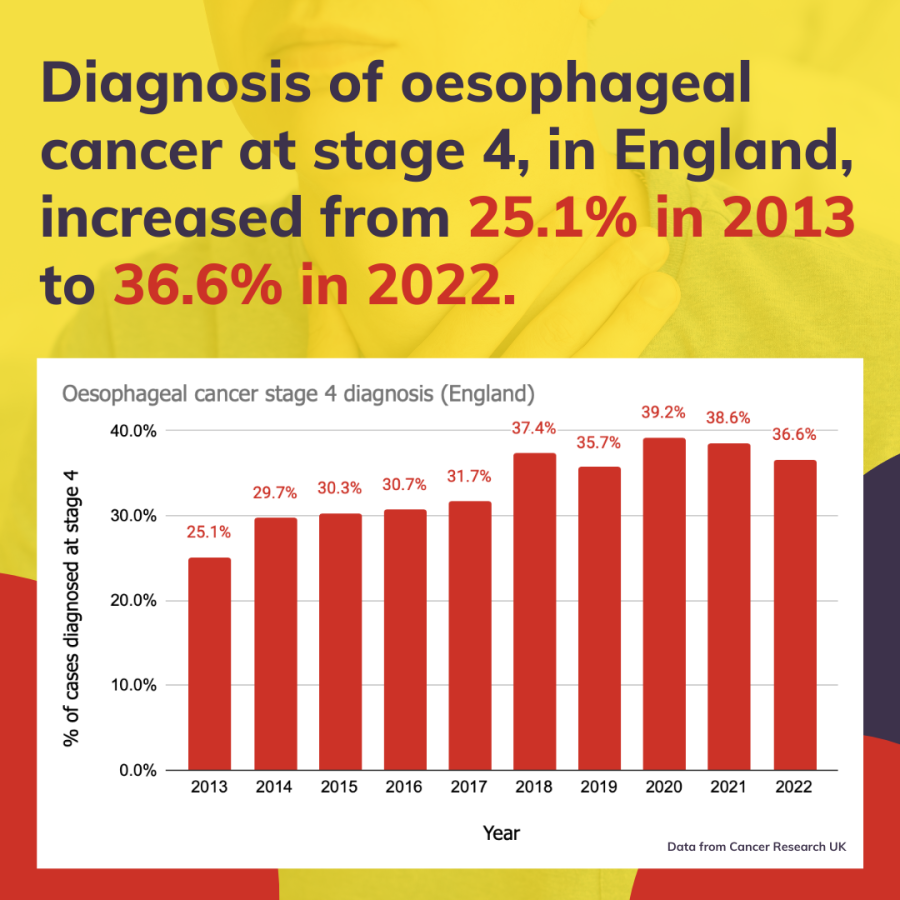
The proportion of oesophageal cancer cases diagnosed at stage 4 has risen from around a quarter to just over a third of all cases, over the course of a decade. This rise in late-stage diagnosis is catastrophic for patient survival.
Action Against Heartburn analysed the latest available data of the proportion of oesophageal cancers diagnosed at each stage in England and found that diagnosis at stage 4 increased from 25.1% in 2013 to 36.6% in 2022.
Stage 4 cancer is an advanced stage of the disease and it means it has spread from its original site. It is serious and often incurable at this stage.
There are around 9,200 new cases of oesophageal cancer in the UK each year and fewer than 20% of people diagnosed will survive for more than five years. The poor life expectancy is largely due to late diagnosis. One year survival for oesophageal cancer is 89% if it’s diagnosed at stage 1 but this drops to 26% if it’s diagnosed at stage 4.
Jill Clark, Chair of Action Against Heartburn, said:
"Oesophageal cancer is the forgotten cancer. Incidence in the UK is disproportionately high and late diagnosis means that it is often fatal.
“The reasons for the increase in late-stage diagnosis are unclear but are likely to be due to a combination of strain on the NHS, referral delays, unhealthy lifestyles, an aging population and poor symptom awareness.
“To improve survival there must be increased public awareness of key symptoms as well as faster routes to diagnosis, better use of innovative screening technologies - such as capsule sponge technology and biomarker testing - and more research into oesophageal cancer.”
Professor Sheraz Markar, professor at the University of Oxford and consultant oesophago-gastric surgeon at Oxford University Hospitals NHS Trust said:
“Oesophageal cancer affects the food pipe connecting the throat to the stomach. The causes are often unclear, but can be related to lifestyle factors such as smoking, drinking alcohol, or being overweight.
“There are good treatment options if it’s caught early, but it becomes much more difficult once it has spread.
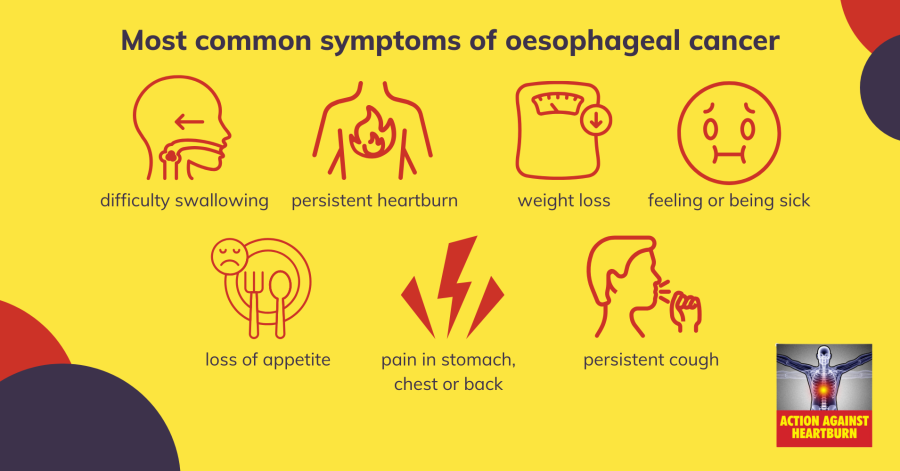
“Symptoms of oesophageal cancer can be vague but a common sign is persistent heartburn. Other symptoms can include problems swallowing, feeling or being sick, unexplained weight loss or chronic indigestion. If you experience any of these then we recommend that you see your GP.”
Andrew Stanley, age 67 from Milton Keynes, was diagnosed with stage 4 oesophageal cancer in 2023. He said:
"I had heartburn for years and didn't realise it could be the sign of something more serious. I saw a doctor when I was having difficulty swallowing food but it took some time for me to be diagnosed. It was a terrible shock to find out I had cancer, especially as I was told it had spread and I'd only have around 2 years left to live.
"At first there were very few treatment options, but then I was very lucky to have the opportunity to take part in a clinical trial at Churchill Hospital in Oxford. It was extremely successful and meant I was able to have surgery and I'm now clear of cancer.
"I want to share my story to give people hope but also to raise awareness of oesophageal cancer because it's relatively common but you don't often hear about it. We need more recognition of symptoms and I'd advise anyone who is continually taking medication for heartburn to go to their doctor."
Thanks to improved treatments, all UK cancer survival rates have generally increased in recent years, but progress for oesophageal cancer has been much slower. This is largely due to the number of cases diagnosed at advanced stages.
Action Against Heartburn aims to raise awareness of the connection between ongoing heartburn and oesophageal cancer, urging individuals to seek medical advice if they experience persistent symptoms.

We are founder members of the
In a nutshell:
- A healthy digestion system needs strong acid in your stomach
- The lining of your stomach is designed to cope with this acid
- The lining of your oesophagus CANNOT cope with the acid
- If stomach acid comes up past the valve into your oesophagus it can be painful (heartburn)
- Prolonged exposure to the acid can damage the cells of your oesophagus lining
- This can eventually lead to cancer.
The Action Against Heartburn Campaign says:
- Consult your GP if you have:
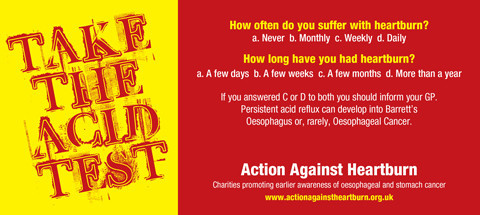
- persistent heartburn (acid reflux, often at night) - ie for three weeks or mor
- persistent indigestion, for three weeks or more
- persistent hiccups or an unpleasant taste in your mouth
- difficulty or pain in swallowing food
- unexplained weight loss
- Do not keep taking over-the-counter indigestion remedies month after month without consulting your GP to investigate underlying causes (which most frequently will be less serious than cancer)
- GPs should consider a review of patients taking prescription remedies for reducing stomach acid after an appropriate period
- Better diagnosis of Barrett's Oesophagus is important
- An endoscopic examination that takes biopsy samples is the main method of detecting Barrett's Oesophagus or oesophageal cancer. This should be available for people of any age with worrying symptoms. More recently, however, a Cytosponge test can indicate Barrett's Oesophagus or other problems.
- Diet, obesity, stress, tobacco and alcohol may contribute to acid reflux, and there are good reasons for us to address these issues even if they do not contribute to us developing cancer.

Radio ad 49389 Action Against Heartburn.[...]
MP3 audio file [1.1 MB]

















 Print
Print